Showing posts with label expedition. Show all posts

Thursday, August 26, 2010

Expedition Medicine - be prepared!

The importance of understanding the basics of medical treatment cannot and should not be underestimated.
Accidents happen.  Be it in the form of a cut hand, a vehicle accident or in the worst scenarios, serious bodily harm that results in a medical evacuation.
Getting ill on an expedition also occurs.  Understand where you are going and the possible diseases that occur.  Malaria, dysentery, dehydration - to name a few.
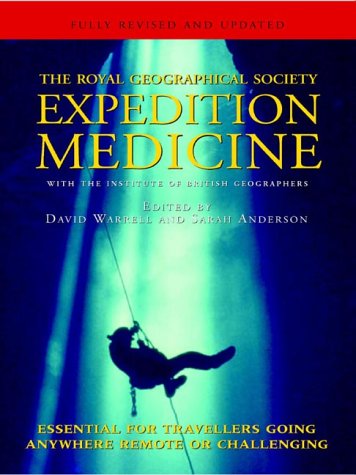
The RGS Expedition Medicine book starts chapter 1 with the following:
An expedition is an organised journey with a purpose. 
This purpose can be exploration, acheiving a particular aim such as reaching the summit of a mountain, scientifc research, surveymg for minerals or a test of endurance. 
In the nine-teenth century expeditions consisted of rugged Victorians seeking to map and claim some remote piece of land for their Crown and country. In the twentieth century expeditions increasingly had a scientífìc purpose, but in the populous world of the twenty-first century personal development and cultural exchange are becoming the predominant reasons for travel.
Exploration and adventure travel are now big business. Some groups still raise their own funds for independent travel, large charitable and commercial organisations send thousands of young people overseas each Year. With specialist tour companies now offering vacations to remote places, boundary between an expedition and a leisure is becoming blurred- Americans recognise this and call what we are describing in this book “Wilderness medicine”. Chapter 1, p3
A few interesting chapters that cover majority of overland expeditions include:
  • Malaria and other tropical diseases
  • Medical problems of environmental extremes - deserts, tropical forests (jungles), etc
  • Plus a host of appendices covering rick assessment and medical analysis 


Plan ahead:

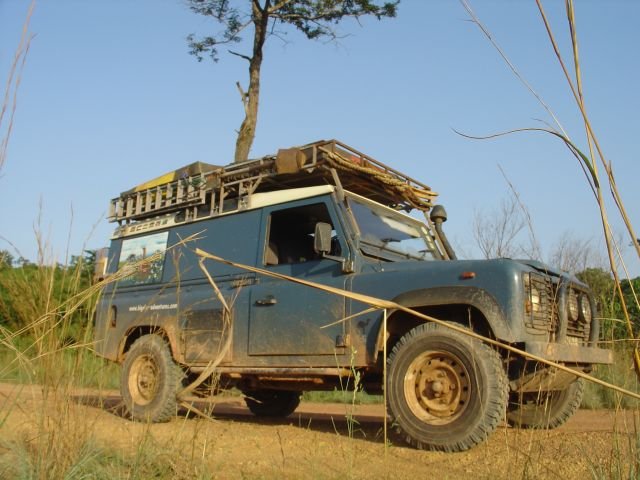
Photo: Daphne Overland (See Below)
  1. Training courses: find an organisation that can provide basic medical training.  In the UK the Red Cross offer a one day training course which covers the basics.
  2. Medical Kit: spend time understanding what you have in your medical kit and how to use it.
  3. Vaccinations: See the blog post on this topic which covers the recommended inoculation's for Africa.
  4. Driving course:  find an organisation that can provide an overview of your vehicle, how to use the 4wd and especially the safety elements of offroad driving and recovery. See notes below
Photo Source: Daphne Overland with Adrian & Catherine
See article on Nomad Adventure

Vehicle Training Courses:
I would recommend that team members from any vehicle based expedition attend a training course to familiarise themselves with their vehicle, the equipment they are taking and the basics of 4wd safety.

USA: Graham Jackson from Overland Training
UK: Paul Marsh from Footloose 4x4

Summary
Whilst thinking about this topic, and that accidents occur, made me pause to think.  My trans-Africa trip went relatively smoothly with only a few stitches, acute malaria, and the odd sore throat.  We had planned well and attempted to keep ourselves healthy through good diet and cleanliness.  However, I do realize that certain overland expeditions attempt difficult tasks (finding new routes etc) which increase the risk level.  Do a risk assessment prior to undertaking a task - walk the muddy road to find good traction ; carry clean water whilst on safari.  These small trivial tasks go a long way in keeping you safe.
In closing, should an accident occur, make that cuppa tea and assess the situation. Once you have gathered your thoughts, plan the recovery.


Buy the Book:
Amazon UK link (cheapest option)
Or Amazon.com

Saturday, December 5, 2009

Website Creation - Free Tools to get your Overland Trip online

Do you need a website for an overland trip?  What are the benefits that a website and online media offer to the overlander?

In this blog, I outline my thoughts on the matter of creating a website, social media (facebook & Twitter),digital media (video & audio) and concepts like Geotagging and RSS.  In essence, the tools that will enable you to create your expedition website whilst keeping your financial costs low.

Thursday, November 19, 2009

Expedition Land Rovers through the Generations

What is it about the image of a dusty Land Rover parked on the rolling savanna of Africa?  Is it the thought of exploration, freedom, and adventure?
In this blog, I link to a few Land Rover expeditions that have been used through the generations.

Since the very first Land Rover rolled off the production line, these vehicles have been used on expeditions across the world.  Here's a quick reference of overland trips which have used the Land Rover as the vehicle of choice throughout the Land Rover Generations.  I have not included any of the new generation Land Rovers, namely, the Range Rover, Discovery and Freelander.  This blog focuses on the original design and the various modifications that have enabled the vehicle to be the perfect choice for a vehicle based expedition.

Land Rover Series I - 1948 to 1957

George Adamson drove from the UK back to Kenya as part of his honeymoon with Joy. His book, Bwana Game, tells the short story of his trip in his Series I Land Rover. The following photos are scans from his book. Apologies for the binding getting scanned in!

The Great 1953 Trek - a family of four drive from Bath, UK to Salisbury, Rhodesia (as it was known then).

Additional scanned photos from the various books I have sourced the information from.  See the list at the end of the blog.

Wandering Star
I spotted a number of articles written about this Series I, however, I have never been able to track down the owner.  Here is one of the articles, including a number of scanned photos.


Land Rover Series II - 1958 to 1970
Series IIa - the primary difference between this model and the previous was the introduction of the diesel engine and eventually the headlights moved to the fenders.

My first Land Rover was a 1968 Series II.  It was fully kitted for overland travel - this included a rooftop tent, fridge, 2nd battery, two diesel fuel tanks, an overdrive and a noisy 2.286L diesel engine. Fully loaded, the vehicle could cruise at 50mph but lacked power to even attempt a normal incline.  Engaging low range, via the red knob lever, was the only way the vehicle could tackle any obstacle.


Land Rover Series III - 1975 to 1985
A few additional modifications took place however the base chassis and body shell remained unchanged to the average person.   The model varied from a three door, to five door 109" chassis or the alternative short wheel base 88".
In recent years, overlanders have purposively chosen the Series III based on its rugged ability to endure all types of terrain, along with the basic mechanical knowledge required to keep the vehicle mobile.

A few websites are listed on The Africa Overland Network.

Under African Skies by Derek Lean


African Snail - Murray & Moira head South from the UK to South Africa via West Africa.  Their vehicle had already completed a full Trans-Africa trip prior to them starting their expedition.


 A few more photos from the Archives:

Series III Lightweight
I can't seem to find any trips across Africa which have used the Series III Lightweight (which was effectively the UK military version of the Series III 88").  The one trip, Dollars and Chocolate, used a lightweight from the UK to Nepal.


Land Rover 110 - 2.5 (non Turbo)
The first version of the iconic Land Rover Defender shape.
In and Out of Africa - Derek Tearne (Flickr Photos)


Land Rover 200 Tdi
With the development of fuel injection and the stability of turbos integrated into diesel engines, Land Rover
released the 110 Defender fitted with the 200Tdi engine.  The base engine was a 2.5l turbo diesel.
I choose this vehicle for my most recent Trans-Africa trip based on the reliability, and maintainability of the engine.  This vehicle, like its 110 predecessor was permanent  four wheel drive.  A centre diff was available to lock the diagonal wheels should the need be required.

BigSky Adventures
My first complete Trans-Africa trip was undertaken in this vehicle.  My trip was the fourth Trans-Africa that this Defender had done.  I, inturn, sold it to another overlander who completed an additional trip.  I believe the vehicle is being sold and is ready for its next trip through Africa.


Land Rover 300 Tdi
Increased power, modified turbo were the upgrades to take place ont this Defender.  An immaculate example of this vehicle is the website below.

Africa Wanderer

Land Rover TD5
Firstly, let me be honest here - I am battling to find anyone who has a Trans-Africa overland website based on the Defender TD5.  I got close when Charlie Mouse Adventures wrote the following but later changed their minds and sold the TD5 for a fully prepared 300Tdi.

With this in mind, we purchased a 1999 Land Rover Defender Td5 which we lovingly called “Bertie” the blue Land Rover (can you seem a theme developing here??) and immediately got to work researching what would need to be done to transform Bertie from a rather “pimped”  Land Rover from Eastborne into an overland vehicle that would get us safely across Africa over the course of 11 months. Unfortunately, we were not wise in our initial choice – the newer Land Rover Td5 engines have an electrical control unit (ECU) the complexity of which, for most mechanics in Walthamstow, never mind sub-sahara Africa, would cause a sharp intake of breath. Still – having learnt this rather vital bit of info a bit too late, we thought we would persist with Bertie – although it would be a nightmare if anything did go wrong (requiring diagnostic computers not available in much of Africa), the Td5 engine is generally considered more reliable therefore less likely to go wrong … we would pray our way across Africa!

So, my hunt for a fully Trans-Africa website using a TD5 continues...  If you know of a website, please let me know.


Land Rover Defender 2007 (Puma)
Introducing the latest edition to the Defender family was the 2007 model, named the Puma by LR enthusiasts.

The website Gapyear4x4, are currently travelling in a fully modified Puma. Click here for a video clip of the vehicle

Gap Year 4x4

I liked this page from the Gap Year 4x4 website - Boys side vs Girls Side


Land Rover 127 & 130
The vehicle was aptly named after the wheel base was stretched from 110" to 130".  
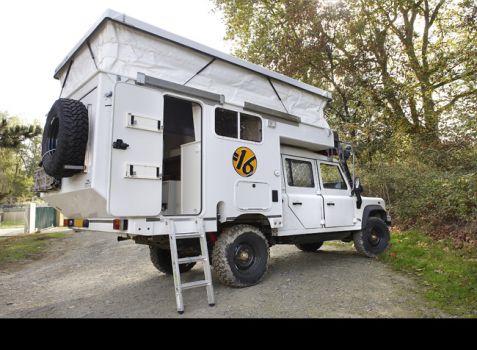
Les 4 O


Land Rover Ambulance
Although not a new design, the Ambulance body has been fitted to a number of Land Rovers over the years.  As early as the Series II, various Ambulance rear bodies were built to provide support to the British Army.
The benefit of these vehicles is the benefit to modify the interior as a camper.
Here are a few sites that have used a Land Rover Ambulance:

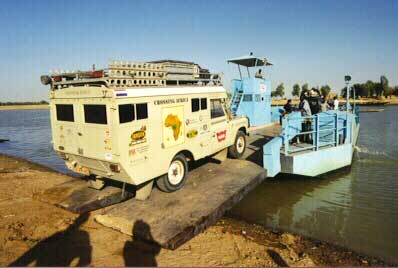
Crossing Africa 
Crossing Africa


Land Rover Forward Control - the Land Rover Forward Control only lasted a few years in production. It offered easy camper conversions with plenty of space as described in this photo:
In recent years, David Visagie, drove from South Africa to Germany via East Africa.  He added the following comment to an earlier blog (overland with kids) entry:

Not sure if the registration is the same in the Uk but in SA the Forward control is registered as a vehicle not a truck, we had to argue the point at most border crossings but always won in the end as it states this in the vehicle documents and carnet, the difference in taxes and "insurance" is huge. I fitted a 300tdi motor and did a few upgrades, true to Landrover nature the forward control is so universal, the size of the ambulance is perfect, not to big and not to small, you can fit everything you need inside the vehicle even a shower and toilet (important for the little one) and still have enough space to move around. Park and go the next morning without having to get out of the vehicle is a big big advantage.


Land Rover 101 Forward Control - 1972 to 1978
Once again, Land Rover produced a vehicle for the British Army that had limited success.  Fitted with a petrol V8 engine, the 101 was noisy and heavy on fuel.
Overland trips in a Land Rover 101 are very rare - this could be due to a number of factors - limited numbers for sale, the perceived expensive of a V8 vs diesel and the age of the vehicle.  In the last decade, only two Trans-Africa trips have used 101s and recorded their trip via a website.
Enable Africa


Africa Total

In summary, the versatility that Land Rover brings to overlanding has enabled it be widely used throughout the generations.  Its simplicity, functionality and ruggedness allow the driver to have confidence that the vehicle will cope and the expedition will reach its goal.

Endless debates can be heard around campfires ranging from reliability, bolt-on bits and if the vehicle is the 'Best4x4xfar'.  I will end with this one thought:  Land Rover has enabled thousands of individuals to enjoy the concept of overlanding and will continue to do so.

Comments always welcome.

Books Referenced:
Bwana Game - George Adamson
Trans-Africa Motoring - Colin McElduff
Overland - Peter Fraenkel

Monday, October 26, 2009

Kingsley Holgate - Mama Africa's Explorer

A new book by Kingsley Holgate has been released.  In this blog, I provide an overview of his books, plus a link to Amazon UK.

Kingsley Holgate - explorer, ambassador, husband, father - is an awesome South African Gent eagerly evangalising about Africa, her people, her life and beauty.  His latest book, Afrika : Dispatches from the Outside Edge has just been released.  The book is based on his recent expedition and can be viewed here - Outside Edge

I am looking forward to receiving my copy in the coming weeks.  Click here for Amazon UK


I have copies of all his books and highly recommend reading them:

Cape to Cairo - A family Expedition along the waterways of Africa
In his first book, Kingsley and his family take the Scroll of Peace, two inflatable boats and head North from South Africa following the waterways of Africa.  A good read that keeps you captivated and enthused about Africa's waterways.


Capricorn - Following the Invisible Line
Following the Invisible Line plots Kingsley and Co. taking two Land Rovers along the Capricorn Line.  Africa, the Americas, Australia and Madagascar form part of the route.  The book uniquely includes a DVD with video and photo highlights of the trip.  The Land Rover Defenders taking a punishing through mud, sand and bush but manage to take the crew around the world.


Africa - In the Footsteps of Great Explorers
There are plenty of Unsung African heroes - in this book, Kingsley and Co. follow those unsung heroes.  Good stories, especially as Kingsley's writing is real and enthusiastic.


Feel free to go ahead and purchase your Christmas gift!

For more information on Kingsley Holgate, see my blog about Vehicle Based Expeditions

Sunday, October 18, 2009

Overland Vehicle Insurance

What insurance is needed for Africa?  In this blog, I provide an overview of third party insurance for a Tran-Africa trip.
A mandatory requirement for every country in Africa is third party insurance.  In theory, this insurance will cover you for any accidents that may occur.  In reality, it's essential cover that will provide evidence at each police check point but will probably not cover you legally if you opt to go to court.  In most accidents, financial settlement will be negotiated and payment made in cash to the third party.

Majority of the African countries are covered by two consortium's, namely, Ecowas Brown Card and the Comesa Yellow Card.

Ecowas Brown Card
Ecowas refers to The Economic Community Of West African States and covers fifteen countries. Wikipedia provide a list of all current and past countries.
The insurance is provided in the first country of entry and is valid from the entry date.  Payment is usually in CFA or the equivalent Euro.
The Brown Card replaces the original Grey Card.  In some remote border posts, the police might refer to the insurance as Grey Card.


The following examples are from the BigSky Adventures 2005 overland trip.

Front Cover

First Page

List of Countries as per the insurance booklet.

Comesa Yellow Card
Comesa refers to the Common Market for Eastern and Southern Africa. Wikipedia provide a list of the current and past member states.  Payment is usually in the local currency at the first border post or in US Dollars.


The following is an example from BigSky Adventures.


Other Countries
I don't have records of all the other countries we passed through but have the following:


Morocco
A few EU countries provide third party insurance for Morocco.  Alternatively, insurance may be purchased at the first border crossing.  The process is relatively confusing but once at the correct office, the forms are simple if you have a copy of your vehicle documentation.


Mauritania


Zambia
I have a copy of the Zambian vehicle insurance but also remember buying the Comesa insurance.  Additional clarification is required so double check prior at the border.


Vehicle Resume
One tip I was given was to create a English / French Vehicle Resume. We printed off about 100 copies and used them at each border, and police checkpoint.  It saves plenty of time and often the Police are happy to take the piece of paper rather than write the details down.
An example is provided below:

Tuesday, October 13, 2009

The Lost Routes

Trans-Africa overland routes are constantly evolving ;  unfolding onto a new section of the Michelin map ; always paving a route North, South, East or West.  A route gets blocked, and another opens up...

A quick example from the diary of Graham Jackson and myself:
A year apart we crossed the same remote Gabon / Congo border.  Graham's Land Rover was the first overland vehicle in years, followed by our Land Rover a year later.  Graham journals the following:

Graham got his bolt cutters and cut the lock on the Gabon side of the gate, having decided that was easier than digging up the dead guy to retrieve the key. We drove through 100m of tall grass to reach the Congo side of the border. The officials stamped our passports at the border, then we followed the pickup 10km to Mbinda. The road was very slow and there were many deep mudholes filled with water from last night's rain. Toki got mired once as the dead spot in the steering makes for some tricky driving. A quick tug from the Pinzi got us moving again.
Source:

Our journal a year later related a similar experience.  We eventually crossed the border at 9pm.  I remember patiently waiting to be escorted to the village school where we would be allowed to camp for the night. The relatively short drive along a rough track was slightly harder due to the lights on the Defender failing.
Our route, however, is now a well known route and definitely not part of the Lost Routes.


From Cas & Grahams Tran-Africa Map

The Lost Routes across Africa overflow with adventure, myth and beauty.
Currently the Lost Routes across Africa are mainly Algeria (exiting the Southern Borders) and the large central African region. The map above, photographed by me in 2004 show the route Cas and Graham did in the early 1990's. Typically, the route entered Cameroon, crossed the border into Central Africa Rep. before turning South through the DRC (then called Zaire) and finally East into Uganda.  Mysterious cities, known to most by name only,  linked all these routes - Bangui, Bangassou and Kisangali.


View Overland Routes in a larger map

In 1991 Derek Tearne (Flickr) crossed Algeria heading South.  His route crossed the Sahara before heading East to Central African Republic, Zaire (DRC) and into Uganda.  This is one of the Lost Routes.
His website reads: "A few kilometres down the road, in Mambas, we meet two tour trucks full of tourists driving from East Africa to Europe. Usually when any travellers met on the road they would stop and talk. Some of these tours last for over six months and the trucks seemed to be very self contained. Often the passengers didn't seem to have the same need to communicate as other travellers. The passengers on these two trucks seemed particularly subdued and uninterested in talking. We found one passenger who didn't mind chatting and discovered that the main road route to Beni was closed due to repairs and they had taken the short cut. This road was particularly narrow and had proved difficult for their large trucks. It had taken them four days to drive from Beni. They were already feeling worn down by Zaire. Little did they know how much more Zaire there was to come."

Following a similar route was Derick Lean.  Heading to Kisangani he journals:

Day 126 Wednesday 17th February 1993 60 Km
Get up and go. Road of similar quality all the way to Kisangani, boring but not fast. Pass one small town, perched on the banks of a Congo tributary, beautiful setting but basically in ruins. Arrive in Kisangani about 09:30. Checkpoint into town is a mere formality.

Central Africa, with her red soil, gigantic jungles, offers snaking roads which zigzag the dozen or more rivers.  The rainy season brings mud, and ruts, whilst the dry season bring broken bridges, red dust and humidity.
Her cities are a maze of ex-colonial development, UN investment and African politics.  Tourism does not exist.

It's been almost two decades since these Lost Routes have been used.  I am certain a few brave overlanders have completed the Central Africa route.

The one trip that I know of, in French, is the following website:

Red Bird Dream - unfortunately his journal is no longer available on his website.

In concluding my thoughts, I long for more information about these routes and the early overland trips.  Perhaps one day the current routes will close and Central Africa will re-open.  When that happens, hopefully I will be there meeting people, finding routes and crossing Africa.

Sunday, October 4, 2009

Canvas Roof

With three weekends left before the clocks change in the UK, I felt it was time to re-fit the canvas roof to my cherished Series III 88" Land Rover.  The vehicle was built in 1972 and was fitted with a 2.25L diesel engine.  Underpowered, and as noisy as a tractor, this little 88" turns heads.  The four speed gearbox is fitted with a Fairey Overdrive.  The 16" rims have baby 205/80 tyres but can support the bigger 7.50x16.

The speed claims about 97 000miles but this might only represent the chassis, however, a rebuild did take place 2 years ago.  I can confirm that this is the 3rd engine as the vehicle documentation needed changing, plus the original engine it came with when I bought it seized a month ago.  The new engine is an ebay special so no idea on mileage but based on the engine number it was no. 305 of the Land Rover Factory floor.

The 88" looking bare without its canvas roof - but in this mode, it's a great vehicle to drive in the summer.


First up, are the hoops.  They slot into the rear bin and have a retaining nut and bolt to keep them in place.


Next up are the door frames, which are connected to the hoops.  The door frames have a runner for the canvas to fit.


And finally the canvas roof.  The top of the front windscreen has hoops for the roof to connect to.  The canvas is held in place via a number of internal straps.


The rear of the Land Rover.  I have fitted a fume curtain which should assist with retaining the heat in the front cabin.  On that note, the heat is generated via the water cooling system as its heated through the engine.  Fresh air is sucked through a vent on the left side of the engine.  The heat varies depending on the running temperature of the engine. i.e. only once the engine is warm does the heater work.


Fitting the door windows comes next.  It's an easy job to do as only two nuts hold the top in place.


And finally the job is done.   Not quite your modified Land Rover for overland travel but decades ago, this was one of the few options available.


Here are a few Series Land Rovers kitted for overland travel: