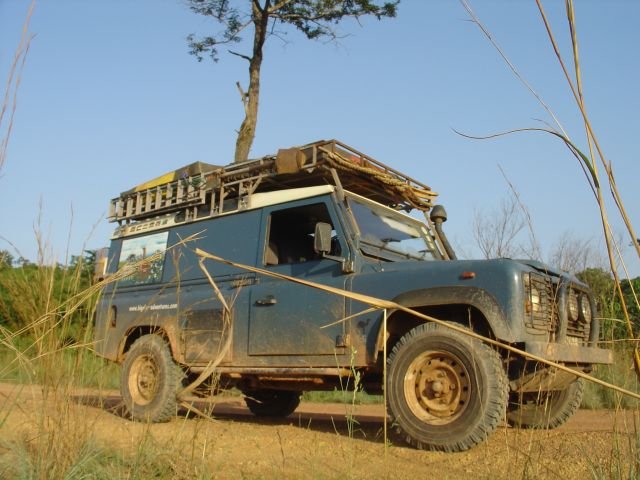
What is it about the image of a dusty Land Rover parked on the rolling savanna of Africa? Is it the thought of exploration, freedom, and adventure?
In this blog, I link to a few Land Rover expeditions that have been used through the generations.
Since the very first Land Rover rolled off the production line, these vehicles have been used on expeditions across the world. Here's a quick reference of overland trips which have used the Land Rover as the vehicle of choice throughout the Land Rover Generations. I have not included any of the new generation Land Rovers, namely, the Range Rover, Discovery and Freelander. This blog focuses
on the original design and the various modifications that have enabled the vehicle to be the perfect choice for a vehicle based expedition.
George Adamson drove from the UK back to Kenya as part of his honeymoon with Joy. His book,
Bwana Game, tells the short story of his trip in his Series I Land Rover. The following photos are scans from his book. Apologies for the binding getting scanned in!
The Great 1953 Trek - a family of four drive from Bath, UK to Salisbury, Rhodesia (as it was known then).
Additional scanned photos from the various books I have sourced the information from. See the list at the end of the blog.
Wandering Star
I spotted a number of articles written about this Series I, however, I have never been able to track down the owner. Here is one of the articles, including a number of scanned photos.
Series IIa - the primary difference between this model and the previous was the introduction of the diesel engine and eventually the headlights moved to the fenders.
My first Land Rover was a
1968 Series II. It was fully kitted for overland travel - this included a rooftop tent, fridge, 2nd battery, two diesel fuel tanks, an overdrive and a noisy 2.286L diesel engine. Fully loaded, the vehicle could cruise at 50mph but lacked power to even attempt a normal incline. Engaging low range, via the red knob lever, was the only way the vehicle could tackle any obstacle.
Land Rover Series III - 1975 to 1985
A few additional modifications took place however the base chassis and body shell remained unchanged to the average person. The model varied from a three door, to five door 109" chassis or the alternative short wheel base 88".
In recent years, overlanders have purposively chosen the Series III based on its rugged ability to endure all types of terrain, along with the basic mechanical knowledge required to keep the vehicle mobile.
A few websites are listed on The Africa Overland Network.
Under African Skies by Derek Lean
African Snail - Murray & Moira head South from the UK to South Africa via West Africa. Their vehicle had already completed a full Trans-Africa trip prior to them starting their expedition.
A few more photos from the Archives:
Series III Lightweight
I can't seem to find any trips across Africa which have used the Series III Lightweight (which was effectively the UK military version of the Series III 88"). The one trip,
Dollars and Chocolate, used a lightweight from the UK to Nepal.
Land Rover 110 - 2.5 (non Turbo)
The first version of the iconic Land Rover Defender shape.
In and Out of Africa - Derek Tearne (
Flickr Photos)
Land Rover 200 Tdi
With the development of fuel injection and the stability of turbos integrated into diesel engines, Land Rover
released the 110 Defender fitted with the 200Tdi engine. The base engine was a 2.5l turbo diesel.
I choose this vehicle for my most recent Trans-Africa trip based on the reliability, and maintainability of the engine. This vehicle, like its 110 predecessor was permanent four wheel drive. A centre diff was available to lock the diagonal wheels should the need be required.
BigSky Adventures
My first complete Trans-Africa trip was undertaken in this vehicle. My trip was the fourth Trans-Africa that this Defender had done. I, inturn, sold it to another overlander who completed an additional trip. I believe the vehicle is being sold and is ready for its next trip through Africa.
Land Rover 300 Tdi
Increased power, modified turbo were the upgrades to take place ont this Defender. An immaculate example of this vehicle is the website below.
Africa Wanderer
Land Rover TD5
Firstly, let me be honest here - I am battling to find anyone who has a Trans-Africa overland website based on the Defender TD5. I got close when
Charlie Mouse Adventures wrote the following but later changed their minds and sold the TD5 for a fully prepared 300Tdi.
With this in mind, we purchased a 1999 Land Rover Defender Td5 which we lovingly called “Bertie” the blue Land Rover (can you seem a theme developing here??) and immediately got to work researching what would need to be done to transform Bertie from a rather “pimped” Land Rover from Eastborne into an overland vehicle that would get us safely across Africa over the course of 11 months. Unfortunately, we were not wise in our initial choice – the newer Land Rover Td5 engines have an electrical control unit (ECU) the complexity of which, for most mechanics in Walthamstow, never mind sub-sahara Africa, would cause a sharp intake of breath. Still – having learnt this rather vital bit of info a bit too late, we thought we would persist with Bertie – although it would be a nightmare if anything did go wrong (requiring diagnostic computers not available in much of Africa), the Td5 engine is generally considered more reliable therefore less likely to go wrong … we would pray our way across Africa!
So, my hunt for a fully Trans-Africa website using a TD5 continues... If you know of a website, please let me know.
Land Rover Defender 2007 (Puma)
Introducing the latest edition to the Defender family was the 2007 model, named the Puma by LR enthusiasts.
The website
Gapyear4x4, are currently travelling in a fully modified Puma.
Click here for a video clip of the vehicle
 |
| Gap Year 4x4 |
I liked this page from the Gap Year 4x4 website -
Boys side vs Girls Side
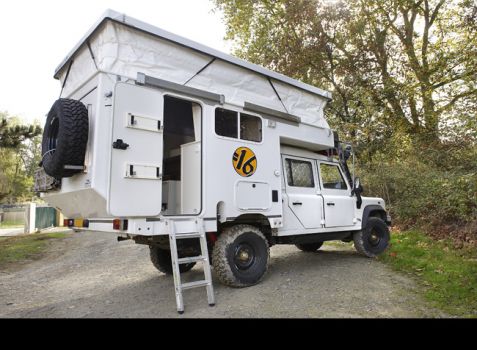
Land Rover 127 & 130
The vehicle was aptly named after the wheel base was stretched from 110" to 130".
Les 4 O
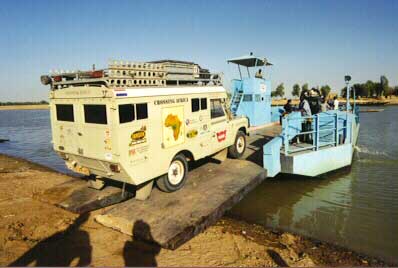
Land Rover Ambulance
Although not a new design, the Ambulance body has been fitted to a number of Land Rovers over the years. As early as the Series II, various Ambulance rear bodies were built to provide support to the British Army.
The benefit of these vehicles is the benefit to modify the interior as a camper.
Here are a few sites that have used a Land Rover Ambulance:
Crossing Africa
 |
| Crossing Africa |
Land Rover Forward Control - the Land Rover Forward Control only lasted a few years in production. It offered easy camper conversions with plenty of space as described in this photo:
In recent years, David Visagie, drove from South Africa to Germany via East Africa. He added the following comment to an earlier blog (
overland with kids) entry:
Not sure if the registration is the same in the Uk but in SA the Forward control is registered as a vehicle not a truck, we had to argue the point at most border crossings but always won in the end as it states this in the vehicle documents and carnet, the difference in taxes and "insurance" is huge. I fitted a 300tdi motor and did a few upgrades, true to Landrover nature the forward control is so universal, the size of the ambulance is perfect, not to big and not to small, you can fit everything you need inside the vehicle even a shower and toilet (important for the little one) and still have enough space to move around. Park and go the next morning without having to get out of the vehicle is a big big advantage.
Land Rover 101 Forward Control - 1972 to 1978
Once again, Land Rover produced a vehicle for the British Army that had limited success. Fitted with a petrol V8 engine, the 101 was noisy and heavy on fuel.
Overland trips in a Land Rover 101 are very rare - this could be due to a number of factors - limited numbers for sale, the perceived expensive of a V8 vs diesel and the age of the vehicle. In the last decade, only two Trans-Africa trips have used 101s and recorded their trip via a website.
Enable Africa
Africa Total
In summary, the versatility that Land Rover brings to overlanding has enabled it be widely used throughout the generations. Its simplicity, functionality and ruggedness allow the driver to have confidence that the vehicle will cope and the expedition will reach its goal.
Endless debates can be heard around campfires ranging from reliability, bolt-on bits and if the vehicle is the 'Best4x4xfar'. I will end with this one thought: Land Rover has enabled thousands of individuals to enjoy the concept of overlanding and will continue to do so.
Comments always welcome.
Books Referenced:
Bwana Game - George Adamson
Trans-Africa Motoring - Colin McElduff
Overland - Peter Fraenkel