Showing posts with label travel. Show all posts

Thursday, August 26, 2010

Expedition Medicine - be prepared!

The importance of understanding the basics of medical treatment cannot and should not be underestimated.
Accidents happen.  Be it in the form of a cut hand, a vehicle accident or in the worst scenarios, serious bodily harm that results in a medical evacuation.
Getting ill on an expedition also occurs.  Understand where you are going and the possible diseases that occur.  Malaria, dysentery, dehydration - to name a few.
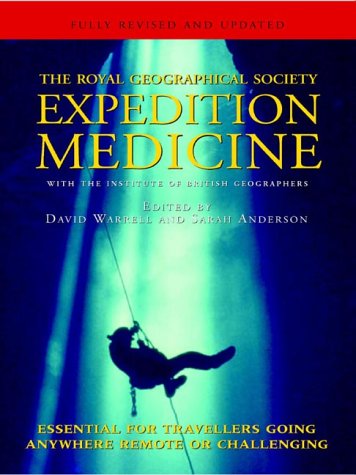
The RGS Expedition Medicine book starts chapter 1 with the following:
An expedition is an organised journey with a purpose. 
This purpose can be exploration, acheiving a particular aim such as reaching the summit of a mountain, scientifc research, surveymg for minerals or a test of endurance. 
In the nine-teenth century expeditions consisted of rugged Victorians seeking to map and claim some remote piece of land for their Crown and country. In the twentieth century expeditions increasingly had a scientífìc purpose, but in the populous world of the twenty-first century personal development and cultural exchange are becoming the predominant reasons for travel.
Exploration and adventure travel are now big business. Some groups still raise their own funds for independent travel, large charitable and commercial organisations send thousands of young people overseas each Year. With specialist tour companies now offering vacations to remote places, boundary between an expedition and a leisure is becoming blurred- Americans recognise this and call what we are describing in this book “Wilderness medicine”. Chapter 1, p3
A few interesting chapters that cover majority of overland expeditions include:
  • Malaria and other tropical diseases
  • Medical problems of environmental extremes - deserts, tropical forests (jungles), etc
  • Plus a host of appendices covering rick assessment and medical analysis 


Plan ahead:

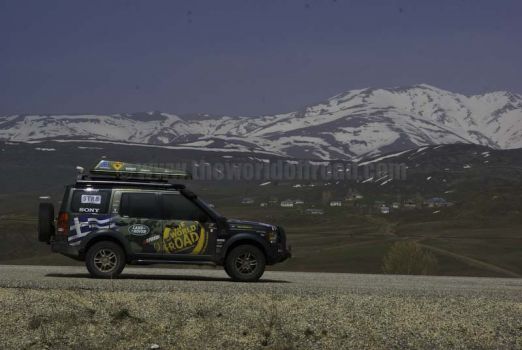
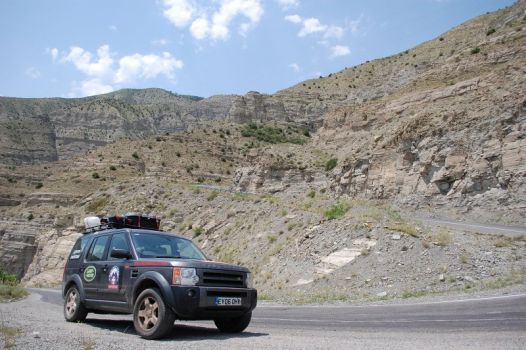
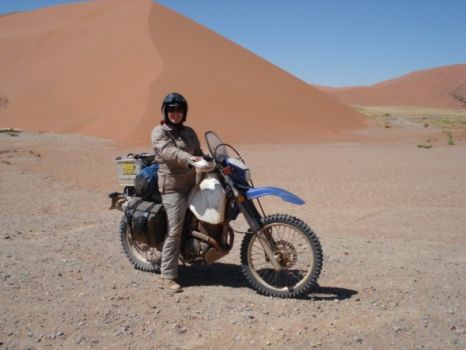
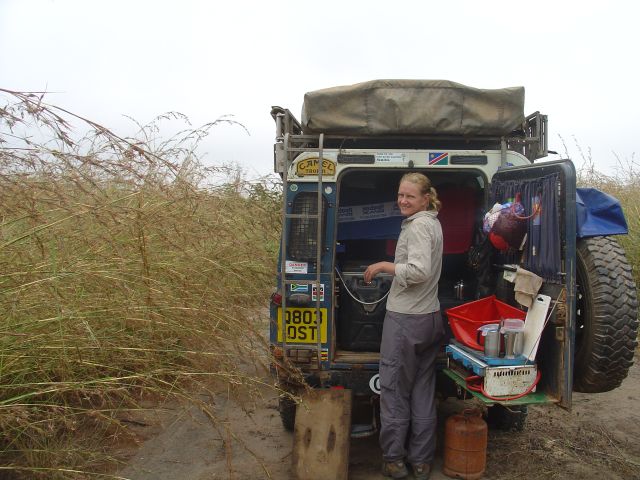
Photo: Daphne Overland (See Below)
  1. Training courses: find an organisation that can provide basic medical training.  In the UK the Red Cross offer a one day training course which covers the basics.
  2. Medical Kit: spend time understanding what you have in your medical kit and how to use it.
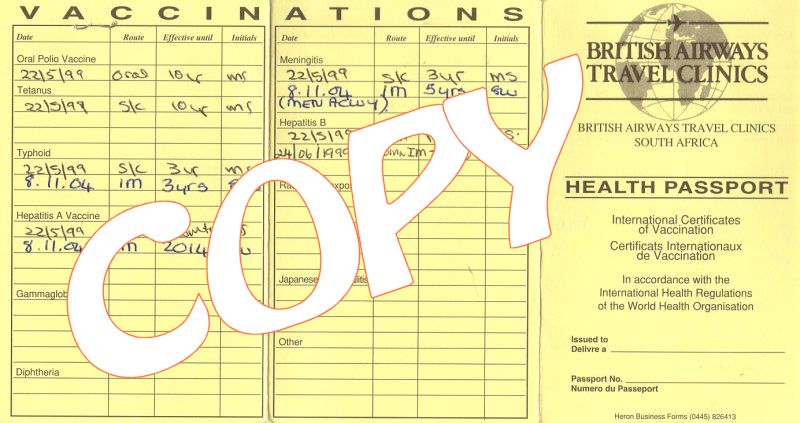
  3. Vaccinations: See the blog post on this topic which covers the recommended inoculation's for Africa.
  4. Driving course:  find an organisation that can provide an overview of your vehicle, how to use the 4wd and especially the safety elements of offroad driving and recovery. See notes below
Photo Source: Daphne Overland with Adrian & Catherine
See article on Nomad Adventure

Vehicle Training Courses:
I would recommend that team members from any vehicle based expedition attend a training course to familiarise themselves with their vehicle, the equipment they are taking and the basics of 4wd safety.

USA: Graham Jackson from Overland Training
UK: Paul Marsh from Footloose 4x4

Summary
Whilst thinking about this topic, and that accidents occur, made me pause to think.  My trans-Africa trip went relatively smoothly with only a few stitches, acute malaria, and the odd sore throat.  We had planned well and attempted to keep ourselves healthy through good diet and cleanliness.  However, I do realize that certain overland expeditions attempt difficult tasks (finding new routes etc) which increase the risk level.  Do a risk assessment prior to undertaking a task - walk the muddy road to find good traction ; carry clean water whilst on safari.  These small trivial tasks go a long way in keeping you safe.
In closing, should an accident occur, make that cuppa tea and assess the situation. Once you have gathered your thoughts, plan the recovery.


Buy the Book:
Amazon UK link (cheapest option)
Or Amazon.com

Wednesday, August 18, 2010

Africa Overland - security and safety

Africa is fantastic continent for the overlander to travel and explore!   However, the question everyone asks: Is Africa safe for an overland expedition?   The quick and easy answer is absolutely yes!
The UK FCO (Foreign & Commonwealth Office) http://www.fco.gov.uk/en/travel-and-living-abroad/ provides a good overview of various threats related to each country – however, and this is the big point: It is very generic and covers areas that sometimes independent overlanders don’t travel to.

Here’s my thoughts on security and safety in Africa.  

Personal Safety First…

Personal Safety realistically comes down to the roads you are travelling on.  The roads in Africa vary considerably and can often lead to accidents occurring.  Driving, were reasonably possible, should be confined to daylight hours only.  This is not always possible but as the verbal roadbook for Africa states ‘Don’t drive at night’.  Here's a short video clip showing the various roads the BigSky Adventures team drove...


Additional elements of personal safety include the usual anti-malarial advice, health & hygiene and safety when working on vehicle.  Each of the last few points can lead to severe consequences and sometimes in a repatriation service back to your home country for treatment.  Examples of this are severe cases of malaria, dysentery and major injuries related to vehicle accidents.

Security whilst travelling…

Security on an overland trip extends the personal safety element to the next level – being aware of the country you are travelling in and the security risks associated with it.  Africa is a country made up of major cities and many small villages.  The big cities understand the concept that travellers (and esp. the weekly tourists) have money, camera equipment and are easily duped into handing them over – usually via theft related to distraction i.e. one person distracts you, whilst the other thief grabs what he wants.  Overlanders can all relate to how one member of the party stays with the vehicle and whilst the rest of the team are doing chores, someone knocks on the window to distract whilst another person attempts to pinch something via an open window or from the rear of the vehicle.

On the positive side, the more time you spend travelling, the more your in-built security radar will begin to alert you of uneasy situations – i.e. driving through a part of town where you know you don’t want to stop ; buying food in market when people are giving you threatening looks.

Small villages:
In my opinion, human beings are generally friendly and more curious about who you are, where you have come from and where you are going.  As a result, the security element in villages is relatively low, and if an incident occurs, local justice is swift.  In the late 1990’s a friend was travelling and his portable radio was pinched.  The village chief arranged a thorough search – they found the culprit and then gave him a good lashing.  My friend was asked to watch the punishment, which made him feel rather guilty that his radio had caused such harsh punishment.  A tough call to make if something like that is stolen and the culprit caught.

Summary:
In summary, personal safety and security are two different topics – look after your personal safety in all you do, especially whilst driving.  Accidents occur very quickly and often lead to severe injuries.
Security is different – be aware of your surroundings and be willing to take advice from locals, other overlanders and your inner voice.  I have been actively reading overland websites and can only state a handful of times where overlanders have been harshly treated with violence. 

Look after your safety and tread lightly…


Suggested Reading:
Expedition Medicine

Wednesday, March 24, 2010

Overland Photography - the banners from The Africa Overland Network

The ability to record an overland trip, through photography, video or audio-bytes is, and will continue, to be an import part of an overland trip.  Each photo relates an experience, a memory and more importantly a time stamp in history.  As the internet grows and the overland websites continue to be written, so the history of overlanding matures.  And so do the photographs.

Photos inspire. They record history.

As part of the website design, The Africa Overland Network displays various overland related photosas a rotating banner images.

Here are a few photos from the vast number, including a link to the many others:


Additional Photos
The Africa Overland Network - Banner Photos

If I could leave one point about photography, it would be: Don't lose, or delete overland photos.  Digitise the old slides & printed photographs. Share them on the internet.  They are history and they need to be remembered.

Monday, February 22, 2010

Toyota Land Cruiser - Gaining traction as an overlander's vehicle

The Toyota Land Cruiser - reliable, comfortable, sound proof and above all, available on the 2nd hand market at an attractive price point to modify into an expedition vehicle.

Land Rover might have truly opened Africa, but currently Toyota are the preferred vehicle of choice.

Here's a quick overview of the various Toyota model's that have crossed Africa, Asia and South America).  Similiar to the Land Rover article, the criteria is an overland expedition and website detailing the trip.

Thursday, December 24, 2009

Overland with Kids...

I have been actively following Andrew & Ann as they prepare for their overland trip from the UK to Oz.

There blog updates have been very informative and offer valuable information.  This one, linked kids schooling, with overland travel.  A subject very close to my heart after I became a dad.


Education
We brought a small box containing reading materials, spellings and maths for both Jessica and AJ. We also brought a journal for Jessica to fill. But, what we failed largely in doing was to have was a set daily structure. We did regular reading each night and Jessica’s journal was completed most days but spelling, maths and any special topics and plans were non-existent. Just the daily journal writing with Jessica we found a struggle at times (e.g. to make Jessica concentrate - to make us concentrate!) As parents, we were as bad as the children (or worse!) in terms of preferring the sun, bikes, beach, sight-seeing, lazing or eating - as precedence over any educational need. We know our faults and are now doing some pre-planning and research into home schooling to ensure we have a more consistent and structured approach to daily educational requirements.

Well worth reading the rest of the blog.
Source:

http://www.overlandwithkids.com/2009/12/reflectionslessons-learned-since-summer-trip-2009/

Saturday, December 5, 2009

Website Creation - Free Tools to get your Overland Trip online

Do you need a website for an overland trip?  What are the benefits that a website and online media offer to the overlander?

In this blog, I outline my thoughts on the matter of creating a website, social media (facebook & Twitter),digital media (video & audio) and concepts like Geotagging and RSS.  In essence, the tools that will enable you to create your expedition website whilst keeping your financial costs low.

Sunday, November 29, 2009

Land Rover Discovery - A reliable Overland Vehicle?

Is the Land Rover Discovery a capable trans-continental overland vehicle?
Throughout decades of overland travel the Land Rover Series and Defender have been successfully crossing continents. In this post, I provide examples of the Land Rover Discovery and its role in Trans-Africa overland trips. I focused specifically on independent overland websites which opted to use a Land Rover Discovery as the preferred vehicle.

  Wikipedia describes the vehicle as:

The Land Rover Discovery is a mid-size SUV, with off-road capabilities, from the British car maker Land Rover; a subsidiary of Tata Motors. There have been three generations of the vehicle, which was first introduced in 1989.


Key Points
In my opinion, gone are the days where the dominant 4x4 vehicle was the Land Rover Series or Defender model, as a result there are a number of key points on why the Discovery is becoming more popular with the independent overlander.   The Discovery offers the following:
  • Superior comfort compared to the Land Rover Defender.  Majority of Discovery's include sunroofs and air conditioning.
  • Similar size to the Defender (physically less rear load space but extra width is beneficial)
  • A raft of overland equipment - roofracks, fuel tanks, bullbars and every other possible modification available
  • In the UK, the Discovery is very affordable compared to the Defender. 
In each of the examples below, the Overlanders have opted for various modifications -  from the standard roofrack and tent, to a fully plumbed in fresh water tanks and long range fuel tanks.  

First introduced in 1989, the Land Rover Discovery launched in a market that was ready for a medium size 4x4. Similar to the Defender, this vehicle offers excellent offroad capability plus the interior offered comfort and airconditioning.


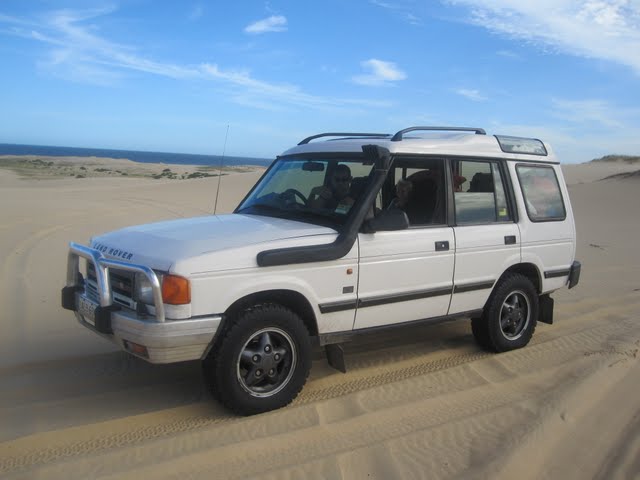
My first Discovery, as pictured below, was a 200tdi (2.5 Turbo Diesel), five door model.  The vehicle had a five speed gearbox, with a central locking diff in either high or low range.  


Here are a few overland prepared examples:

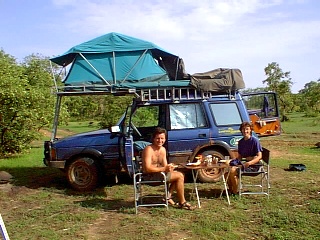
In April 1999, Scott and Renee headed South from Spain en route to South Africa.  The Discovery chosen for the trip was the 200tdi, 3-door edition.  


The additional benefit over the LR Defender was the wide rear door which enabled easy access to rear of the vehicle as seen in this photo.


Prepared to the n'th degree, Andrew and Jacqui spent plenty of time and effort in kitting the perfect vehicle.  The Discovery had access to the rooftop tent (via the front sunroof).  The rear seats were removed and cupboards fitted to contain all the travel equipment.  A long range fuel tank, and two water tanks were fitted.


Additional photos from an afternoon spent at the UK Land Rover Billing show:


Land Rover Discovery 300tdi
Launched in 1994, this Discovery had the new 300tdi engine (2.5L TD), facelift headlights and interior.  Additional changes included a new gearbox and a few extra chassis modifications.

A few examples of trips...

Taniya and Clive are currently heading South from the UK and have a good website with excellent photos and videos.  


A short YouTube video clip shows the vehicle:


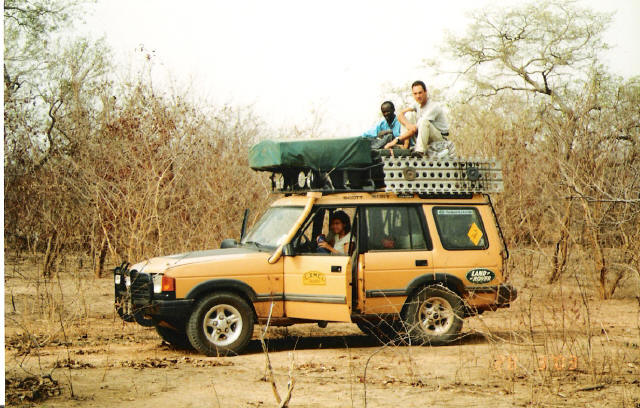
Peter Strong bought a fully kitted Camel Trophy Discovery and headed South and eventually North again.
Peter journals:
The Camel. 300TDi Discovery (P244 KAC) that was factory built for the Mongolia Camel Trophy Competition in 1997. I found the Camel in the care of Simon Pitchford in Gibraltar. Simon was gutted to lose one of his favourite toys - I was delighted to find a vehicle that was capable of taking the journey on.


Colin and team headed South from the UK in a Discovery.


Wayne and Tracy write the following about their Discovery 300tdi:
We decided on a Land Rover for our trip and bought a 1998 Land Rover Discovery 300TDi in early 2008.  The Landy was partly modified from a previous trip but we felt that it was not adequately prepared for our needs and still needed a lot of work and TLC to get it ready for our trip.


Launched in 1998, the Discovery II was the first vehicle to use the new 5-cylinder diesel engine (TD5) plus the new 'fly-by-wire' electronics which controlled fuel injection, traction control, and Active Cornering Enhancement (ACE) which prevented body roll. 

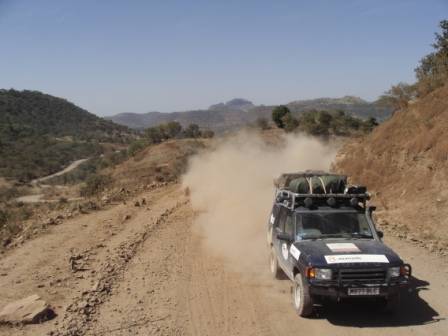
Paul and Jacinda headed North in their TD5 - their website offers an excellent vehicle prep page, including updates on equipment used.  

Quote from the website:
The most important accessory in my opinion for a diesel 4wd is a snorkel. Get water in a diesel and given the high compression ratio you can say goodbye to your engine. Apart from keeping water out they do a reasonable job of keeping the dust out and suck cooler air to boot. Combined with a K&N air filter, Truckasaurus breathes at its best.
This Discovery launched with a totally new design, including the innovative Terrain Response system and 6-speed gearbox.


The World Off Road
Akis and Vula have a superbly modified Discovery 3.  They are yet to reach Africa (Nov 09) however as they are currently travelling, I will include them.  As stated above, the criteria to be included is an independent website detailing their Trans-Africa overland trip.


Big Adventure
Jen & Noam are heading around the world in their overland prepared Discovery 3 (2.7 diesel)


Land Rover Discovery 4
Launched in September 2009, this Discovery introduced a new 3.0l twin turbo diesel engine, smoother body lines and new interior trim levels (to match the Range Rover).  This Discovery is still relatively new and attracts a price point that most independent overlanders tend to avoid.


In summary, the first Discovery offers a fantastic overland vehicle - engine reliability, ability to easily modify and the 'Good Look' feel about it.  The benefit this vehicle has is the 2nd hand price point, the expedition kit availability and the lack of electronics.
Moving to the TD5 version introduces the electronics - however, with the right computer, diagnostics will be a breeze.  Additional spares will also need to be carried in advance of any breakdowns as remote areas will probably not have the latest diagnostic equipment.

As time moves on and we look back in ten years, I expect to see more electronics in vehicles and easier diagnostics which should make the newer Disco 3 & 4 available as an overlander.

Additional Reading:

10 Reasons why the Discovery makes a good overlander

Friday, November 6, 2009

Vaccinations - What are required for Africa?

Vaccinations - important or not?  


Prior to the start of our BigSky Adventures Overland trip (in fact, a good few months before), we started our vaccinations.  Although expensive, it makes you aware that soon you will be leaving home and starting a trip of a lifetime.

In this blog, I give a quick overview of the important vaccinations that are required for your health and for certain border crossings.


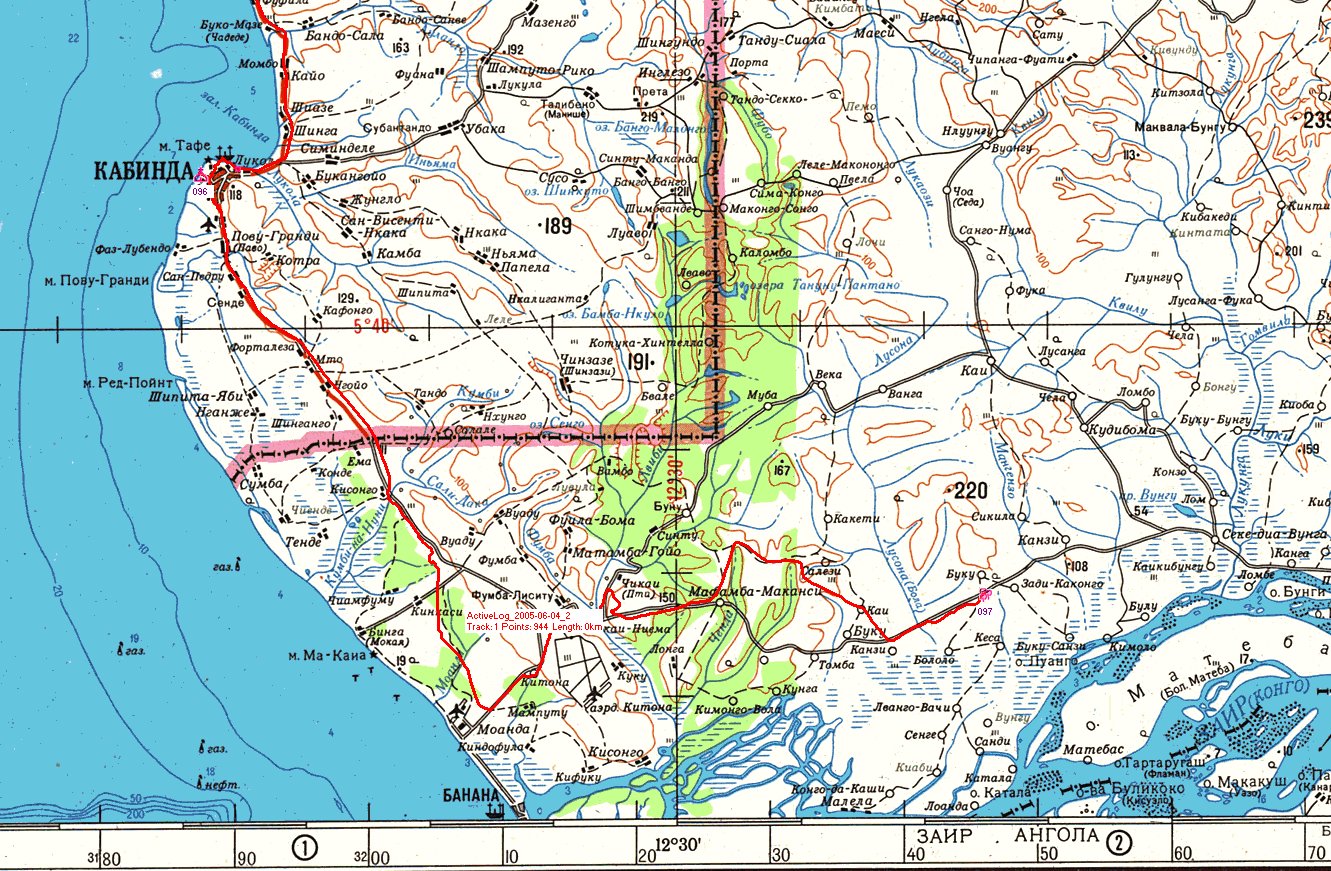
A quick story - on the 4th June 2005, my wife and I, along with our travelling companions crossed from Cabinda, Angola into the DR Congo.  See the Russian Map with our GPS tracklog in Red ending at the nights bushcamp.

It was the usual mayhem or a border crossing but something unique took place that day.  Generally a border crossing involves Immigration, Customs and Police.  This day, we were introduced to the Health Officer and his team.
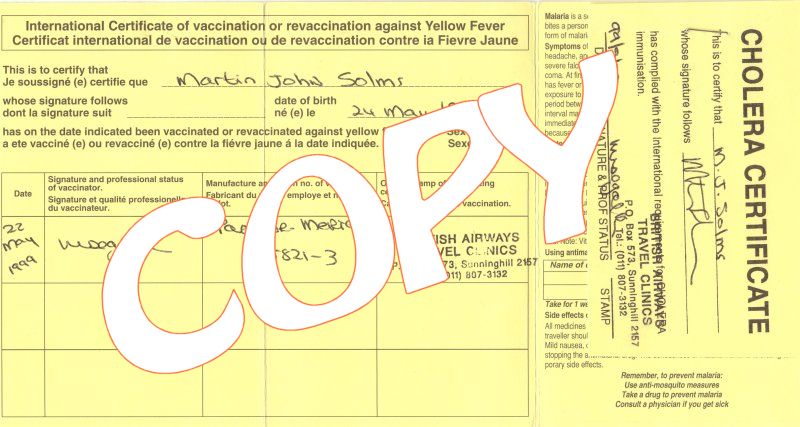
This was the first time we had been asked for our vaccination certificates.  I produced my yellow certificate with the big words Cholera and Yellowfever. This certificate was acceptable.  My wife's certificate, having been issued only a few months before, was a blue and white book and did not have the typed words Cholera (as this is not longer a mandatory vaccination).   The Health Officer was not convinced until we eventually pointed out that my wife had indeed had the vaccination and that it was written in the book.

This was only part one of the visit with the Health Office - on the day I wrote the following on the website:

Formalities took a couple of hours to complete - the really unusual bit of the process was the interview with the medical officer.  Producing a thermometer, the officer indicated that he wanted to take our temperatures.  Concerned about placing the thermometer in our mouths (!) - the officer and all the 'add-ons' burst out laughing.  Not mouths - but armpits! Whilst waiting for thermometer to register our healthy temperatures, he jotted in his journal and eventually we were allowed to proceed.  We think this has to do with the Ebola / Marburg virus.

In summary, it is worth making sure that you have your vaccinations and that you have the paperwork ready.

Vaccinations required:

This list is not extensive and should only be used as a guideline. Consult a travel clinic or your local travel clinic prior to travelling.

Yellow Fever - This is a mosquito-borne viral disease. Illness ranges in severity from a flu-like syndrome to severe Hepatitis and Hemorrhagic (multiple systems are affected like vascular system) fever. Typically found in sub-Saharan Africa and tropical South America. An international Yellow Fever certificate is required.

Hepatitis A - Usually transmitted via contaminated food and water.  It attacks the liver and my lead to jaundice and prolonged illness.

Hepatitis B - This virus is transmitted sexually and by contaminated needles. The vaccine is a three dose course over six months. Plan ahead so that you don't run out of time to get immunised.

Typhoid Fever -  Typhoid Fever is more common in areas of the world where hand washing is less frequent and water is likely to be contaminated with sewage.

Tetanus - This is a serious bacterial disease contracted following contamination of deep puncture wounds. Typically if one is involved in a car accident. The vaccine lasts for 10years.

Cholera- This virus is transmitted by contaminated food and water. The infection is rare in travellers unless work is being done in refugee camps or hospitals. Most countries only issue a Cholera certificate, however, there is a new Cholera vaccination (oral type) which lasts for 2 years.


Meningitis - Typically only transmitted via infected persons. There are different strains throughout Africa. There is a multi-strain vaccination available.

Malaria - The most popular and dangerous disease that typically spreads by mosquitoes that bite from dusk to dawn. Three types of drugs are available: Doxycycline (1 tablet per day), Malarone (1 tablet per day) and Mefloquine (Lariam - 1 tablet per week). All have different side effects and total trip duration time lines.

Rabies - Rabies is transferred from a bite of a rabied animal.  The infection affects the nervous system.  Domestic animals only account for 10% of the rabied population. The vaccination is a multi-injection prescribed over a few months. Our worry is getting bitten by a monkey or a dog.

Additional Links:

Tuesday, November 3, 2009

History of The Africa Overland Network


I often get asked why I started The Africa Overland Network.
Here’s a quick overview of why I started the site and the reason behind it.

I started the project late 2000 as a result of my personal website which tracked overland websites.  I hungered for overland information – where did people go, how did they modify their vehicle, how much did it cost and where are the best bushcamps situated. My personal website was a generic mix of Land Rovers, Travel, Overland and the odd family family.  Overall it was not that applicable as a dedicated site hence the move to the dedicated site.

The first website which inspired me...
In early 1996, I was searching the web, using an early version of Netscape browser and a 18k modem line, for Land Rovers, overland and expeditions based websites.  I stumbled upon a new website called ‘In Search of Lovedu’.  Heading South from London to South Africa (via West & Central Africa), this website was being updated as the journey progressed - a new concept was being established: live overland reports as the trip happened.  According to the website author (Ann Jones), this was a lengthy process of recording the website on a floppy disk and posting it to the USA.  It would then be copied onto the site - a few updates got lost, misdated but the concept of live internet updates was on the edge of the internet.
I was intrigued by the sites ability to keep relatively updated and so began the process of documenting my first overland trip in a 1968 Series II Land Rover. See ‘To Africa and beyond’ for the website. 

Over the next few years, I started collecting and receiving links from other overlanders.  In September 2000 I launched The Africa Overland Network – a site dedicated to independent overland trips.  Primarily privately funded these websites offers diary updates, photos, GPS coordinates and embassy visa information and as internet access has increased video clips.  Information on the websites range from single line entries to paragraphs of useful, and sometimes useless information.  The uniqueness of each site is still the personal aspect and the fact that for most people, this is the first endeavor into the overlanding world.

Although the site is primarily Africa based, more independent trip were springing up with covered The Americas, Australasia and world trips.  The site now hosts a vast number of those trips – see below for a few stats.

One downside of independent trips is the fact that websites are generally created for the duration of the trip.  I estimate that about 300 trips are now lost due to websites closing down.    As a result, I now offer a hosting service for websites that are about to expire.

Keeping a website like this updated has taken a lot of time.  I went through phases where I would not update the site for months due to the manual method I used of creating the BIO page.  I came to the conclusion that the only way the site could grow would be through a professional web design and the ability for easy uploads and management.  The new site offers all this...

The website evolves…  here are a few screen shots of the website as it has evolved over the years:


A new concept I started in 2001 was the use of a guestbook to allow people to advertise their trip - after about 80 odd trips, the concept evolved and vanished.


The current concept begins to evolve - a new colour scheme, rotating banner and more trips... still very manual and cumbersome to update so the design had to be modified.


I have always been interested in overland books - this layout, attempted to list books as I read them.


In 2008 I opted to spend a lot of money to have the website modified with an admin system as the process of creating a new BIO page was taking to long and the formatting was always different.  The result was the new look and feel, which offered easier access, plus the ability to search for trips.

Evolving ever further, another need sprung up and that was the ability to keep updated with new content.  Thanks to the concept of RSS feeds, Overland-Live now uses Google Reader to collect and present all the latest video, diary, photo and forum updates. And not to mention, the new concept of Twitter.


A few statistics:
Websites listed – 670 (a few lost links amongst those)
Websites viewed by day – about 500

That’s about it for the history of The Africa Overland Network.  Let me know if you have any questions or comments.


Monday, October 26, 2009

Kingsley Holgate - Mama Africa's Explorer

A new book by Kingsley Holgate has been released.  In this blog, I provide an overview of his books, plus a link to Amazon UK.

Kingsley Holgate - explorer, ambassador, husband, father - is an awesome South African Gent eagerly evangalising about Africa, her people, her life and beauty.  His latest book, Afrika : Dispatches from the Outside Edge has just been released.  The book is based on his recent expedition and can be viewed here - Outside Edge

I am looking forward to receiving my copy in the coming weeks.  Click here for Amazon UK


I have copies of all his books and highly recommend reading them:

Cape to Cairo - A family Expedition along the waterways of Africa
In his first book, Kingsley and his family take the Scroll of Peace, two inflatable boats and head North from South Africa following the waterways of Africa.  A good read that keeps you captivated and enthused about Africa's waterways.


Capricorn - Following the Invisible Line
Following the Invisible Line plots Kingsley and Co. taking two Land Rovers along the Capricorn Line.  Africa, the Americas, Australia and Madagascar form part of the route.  The book uniquely includes a DVD with video and photo highlights of the trip.  The Land Rover Defenders taking a punishing through mud, sand and bush but manage to take the crew around the world.


Africa - In the Footsteps of Great Explorers
There are plenty of Unsung African heroes - in this book, Kingsley and Co. follow those unsung heroes.  Good stories, especially as Kingsley's writing is real and enthusiastic.


Feel free to go ahead and purchase your Christmas gift!

For more information on Kingsley Holgate, see my blog about Vehicle Based Expeditions

Tuesday, October 13, 2009

The Lost Routes

Trans-Africa overland routes are constantly evolving ;  unfolding onto a new section of the Michelin map ; always paving a route North, South, East or West.  A route gets blocked, and another opens up...

A quick example from the diary of Graham Jackson and myself:
A year apart we crossed the same remote Gabon / Congo border.  Graham's Land Rover was the first overland vehicle in years, followed by our Land Rover a year later.  Graham journals the following:

Graham got his bolt cutters and cut the lock on the Gabon side of the gate, having decided that was easier than digging up the dead guy to retrieve the key. We drove through 100m of tall grass to reach the Congo side of the border. The officials stamped our passports at the border, then we followed the pickup 10km to Mbinda. The road was very slow and there were many deep mudholes filled with water from last night's rain. Toki got mired once as the dead spot in the steering makes for some tricky driving. A quick tug from the Pinzi got us moving again.
Source:

Our journal a year later related a similar experience.  We eventually crossed the border at 9pm.  I remember patiently waiting to be escorted to the village school where we would be allowed to camp for the night. The relatively short drive along a rough track was slightly harder due to the lights on the Defender failing.
Our route, however, is now a well known route and definitely not part of the Lost Routes.


From Cas & Grahams Tran-Africa Map

The Lost Routes across Africa overflow with adventure, myth and beauty.
Currently the Lost Routes across Africa are mainly Algeria (exiting the Southern Borders) and the large central African region. The map above, photographed by me in 2004 show the route Cas and Graham did in the early 1990's. Typically, the route entered Cameroon, crossed the border into Central Africa Rep. before turning South through the DRC (then called Zaire) and finally East into Uganda.  Mysterious cities, known to most by name only,  linked all these routes - Bangui, Bangassou and Kisangali.


View Overland Routes in a larger map

In 1991 Derek Tearne (Flickr) crossed Algeria heading South.  His route crossed the Sahara before heading East to Central African Republic, Zaire (DRC) and into Uganda.  This is one of the Lost Routes.
His website reads: "A few kilometres down the road, in Mambas, we meet two tour trucks full of tourists driving from East Africa to Europe. Usually when any travellers met on the road they would stop and talk. Some of these tours last for over six months and the trucks seemed to be very self contained. Often the passengers didn't seem to have the same need to communicate as other travellers. The passengers on these two trucks seemed particularly subdued and uninterested in talking. We found one passenger who didn't mind chatting and discovered that the main road route to Beni was closed due to repairs and they had taken the short cut. This road was particularly narrow and had proved difficult for their large trucks. It had taken them four days to drive from Beni. They were already feeling worn down by Zaire. Little did they know how much more Zaire there was to come."

Following a similar route was Derick Lean.  Heading to Kisangani he journals:

Day 126 Wednesday 17th February 1993 60 Km
Get up and go. Road of similar quality all the way to Kisangani, boring but not fast. Pass one small town, perched on the banks of a Congo tributary, beautiful setting but basically in ruins. Arrive in Kisangani about 09:30. Checkpoint into town is a mere formality.

Central Africa, with her red soil, gigantic jungles, offers snaking roads which zigzag the dozen or more rivers.  The rainy season brings mud, and ruts, whilst the dry season bring broken bridges, red dust and humidity.
Her cities are a maze of ex-colonial development, UN investment and African politics.  Tourism does not exist.

It's been almost two decades since these Lost Routes have been used.  I am certain a few brave overlanders have completed the Central Africa route.

The one trip that I know of, in French, is the following website:

Red Bird Dream - unfortunately his journal is no longer available on his website.

In concluding my thoughts, I long for more information about these routes and the early overland trips.  Perhaps one day the current routes will close and Central Africa will re-open.  When that happens, hopefully I will be there meeting people, finding routes and crossing Africa.

Thursday, October 8, 2009

Overlanding with Kids

During our BigSky Adventures trip in 2005 I often wondered what it would be like travelling with a kid.  Our Land Rover Defender catered for the two of us - two front seats only, and a double bed rooftent.  Limited space meant that there was no onboard shower, toilet or even a heater.

As I pondered the idea, I began to research how many people complete a full Trans-Africa journey,or overland journey with children.  A friend of mine told me his story how he and his wife drove from South Africa to Germany in a Land Rover Forward Control.  His son adapted perfectly and helped ease the border process as officials recognised them as a family, and not as travelers.

The current list of travelers with kids are:


My thoughts are beginning to evolve, especially now that I have become a dad.  Our daughter is still a little young to go off on a Trans-Africa trip however, I do think that it might be possible when she is four or five years old.

Vehicle Choice: Small 4x4 - Land Rover or Toyota
A Land Rover Defender will seat three people up front, however, the cramped driving conditions will be difficult over a longer driving period.  If I think back to the bad roads in Angola, having a child sitting next to me would be hazardous due to the constant jolting of the Land Rover.

4x4 Truck
This would be my ideal choice.  The front cab area is large enough for three people, plus the rear load area is sufficient for beds, washing facilities and seating area.


The UK second hand market, mainly ex military, offers ex Daf, Bedford and the odd Iveco.  A few trips with trucks are listed on The Africa Overland Network.

Back to travelling with kids... I don't have much more to add as I need to research a little more.

More later...

Monday, September 21, 2009

Overland-Conversions : The Bongo

There is no doubt about it – a vehicle parked in the bush needs to look like it’s been there before!

That said, nothing looks as good a fully kitted Defender blending into the bush with a rooftent, wheel on the bonnet and dust on the dashboard.  Land Rover might have opened up the continent to exploration but the reliability and distribution network of Toyota has claimed the market.

My question today:  Is a fully kitted 4x4 required for an overland journey?  Fitting long range fuel tanks, huge spotlights, and chunky mud terrain tyres needed?

There is no quick YES or NO to the above question.  I will add that this topic has been debated to the n’th degree and often leads to fireside chats about the bests overland vehicle. 

I want to add a few comments today about the alternative option to the standard Land Rover or Land Cruiser.

The Requirements:
A few requirements are essential in overland travel – a comfortable place to sleep;  good cooking equipment (Fridge & Gas); fresh water tank; packing space
A few non-essential items – winch; spotlights; long range fuel tank; 2nd spare wheel; Hi-Lift Jack;

Here’s my thought – Why not take a factory fitted campervan, built to Japanese reliability, and transform it into an overlander.


Introducing the Mazda Bongo Camper Van.

First introduced back in 1966, the Mazda evolved until the recent launch of the Bongo in 1995 and a facelift in 1999.
As part of the SG Platform, the Mazda Bongo and Ford Freda share the same design. 
The Mazda Bongo is fitted with a 2.5l Diesel engine and has a 4wd drive train, and automatic gearbox.  The engine is the same engine as fitted to the previous range of Mazda doublecab vehicles.
The 4wd does not offer a low range combination which might be a hindrance depending on the route.


The benefits of this vehicle are numerous – factory fitted pop-up roof bed, fridge,  inbuilt water tank and plumbing;  gas hob; blinds on all windows; storage space; air conditioning.

The upgrades required:
A host of modifications are available – a few that I think are beneficial.
  • All Terrean Tyres on larger rims
  • Rear Diff lock
  • Spare well on exterior of vehicle


Watch the following sales YouTube clips for a visual overview of the vehicle:


Mazda Bongo & Ford Freda Standard Equipment

-Twin Air Conditioning climate, front and rear
-Automatic Gearbox With Overdrive.
-Power Steering
-Electric Windows
-Electric Folding Mirrors
-Electric Elevating Roof with 2 berths
-Central Locking all round, with power lockdown
-Fully trimmed interior
-Spot Lamps
-Side Window Blinds.
-Rear Heating


Mazda Bongo & Ford Freda Optional Extras
-ABS (1996 on)
-Drivers Airbag
-Alloys Wheels
-Towing Kits
-Cd Changer
-Front NudgeBar


Mazda Bongo & Ford Freda Measurements and Weights
Length 4.60 Mtrs
Height 2.10 Mtrs
Width 1.70 Mtrs
Weight 2325 Kg,s
Towing 2800 Kg,s

Interior Layout of both the Mazda Bongo and the Ford Freda
2 Front seats/Driver and Passenger
Central sliding Bench (reversible)
3 seat 60/40 with belts.
Rear split sliding/folding bench
3 seats.

Upper birth sleep 2 adults 7'0 x 4' 2
Lower birth sleep 2 children 6'2 x 4' 2


Mazda Bongo & Ford Freda Technical & Engine Specification
SGL 5 Model is 4WD (Permanent)
Engine is in line 4 Cylinder
2500 DIESEL INTERCOOLER TURBO
Max.POWER:130PS(135Bhp)/4000rpm
Max.TORQUE:294Nm/2000rpm
Mpg Urban 28, Extra Urban 34.
Source: http://www.algysautos.com/BONGO_TECHNICAL.html

Any comments on whether this vehicle has the capability to complete a full Trans-Africa trip…

Wednesday, September 16, 2009

Desktop day dreaming.

Another day and another desktop image (photo taken of my monitor)

Overland Preparation:
I am relatively impatient.  When I get an idea, I want to go out and do it.  Forget the training - I want to do it now.

However, reality is not quite like that.  In my quest to prepare for http://www.bigsky-adventures.com, I came to the conclusion that preparation is part of the trip.  In the analogy of an amateur athlete, getting to the start line is the hard bit.  Like wise in preparing for an overland trip.
At the time it seams like hard work as the departure date seems to take forever to arrive - but my key point is this.  Preparation time for an overland journey adds to the time off.  It enhances the journey as you scan maps, read blogs, watch videos and get inspired by other overlanders.  It's important to stop and relax and enjoy the thought that you are about to go on an overland journey.

I am a keen advocate on planning and preparing well - however, there is an element of over planning... more on that thought later.

Dynamic Content

Independent Overland websites exist - fact.   On each of these sites, content is added yet my issue is that the content is often lost, forgotten, outdated which, as a result, we loose.
This impacts the historical aspect of overland travel.

This blog aims to add overland updates that don't feature RSS feeds. i.e they use standard email distribution to add content.

More later...