Friday, August 27, 2010

Bhubesi Pride - TransAfrique 2011

Bhubesi Pride - TransAfrique 2011
A quick plug for Bhubesi Pride's upcoming Trans-Africa trip.

Richard and Co. are heading South from the UK with a Rugby Ball.  Following the East Africa route, the team, all certified Rugby Coaches, will meet with various rugby clubs and schools to share and encourage rugby as a sport.

Thursday, August 26, 2010

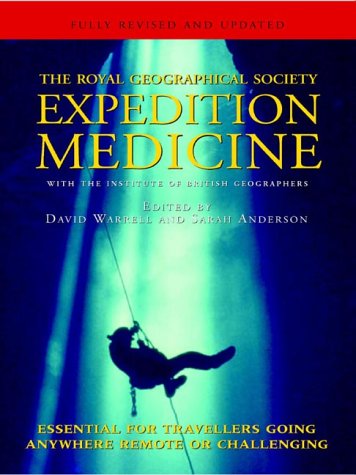
Expedition Medicine - be prepared!

The importance of understanding the basics of medical treatment cannot and should not be underestimated.
Accidents happen.  Be it in the form of a cut hand, a vehicle accident or in the worst scenarios, serious bodily harm that results in a medical evacuation.
Getting ill on an expedition also occurs.  Understand where you are going and the possible diseases that occur.  Malaria, dysentery, dehydration - to name a few.

The RGS Expedition Medicine book starts chapter 1 with the following:
An expedition is an organised journey with a purpose. 
This purpose can be exploration, acheiving a particular aim such as reaching the summit of a mountain, scientifc research, surveymg for minerals or a test of endurance. 
In the nine-teenth century expeditions consisted of rugged Victorians seeking to map and claim some remote piece of land for their Crown and country. In the twentieth century expeditions increasingly had a scientífìc purpose, but in the populous world of the twenty-first century personal development and cultural exchange are becoming the predominant reasons for travel.
Exploration and adventure travel are now big business. Some groups still raise their own funds for independent travel, large charitable and commercial organisations send thousands of young people overseas each Year. With specialist tour companies now offering vacations to remote places, boundary between an expedition and a leisure is becoming blurred- Americans recognise this and call what we are describing in this book “Wilderness medicine”. Chapter 1, p3
A few interesting chapters that cover majority of overland expeditions include:
  • Malaria and other tropical diseases
  • Medical problems of environmental extremes - deserts, tropical forests (jungles), etc
  • Plus a host of appendices covering rick assessment and medical analysis 


Plan ahead:

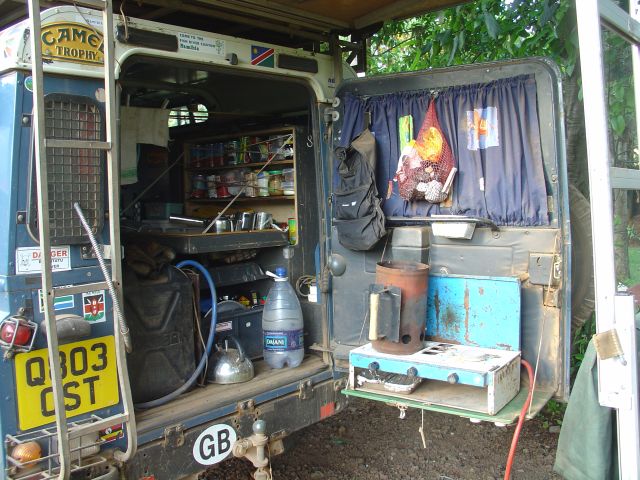
Photo: Daphne Overland (See Below)
  1. Training courses: find an organisation that can provide basic medical training.  In the UK the Red Cross offer a one day training course which covers the basics.
  2. Medical Kit: spend time understanding what you have in your medical kit and how to use it.
  3. Vaccinations: See the blog post on this topic which covers the recommended inoculation's for Africa.
  4. Driving course:  find an organisation that can provide an overview of your vehicle, how to use the 4wd and especially the safety elements of offroad driving and recovery. See notes below
Photo Source: Daphne Overland with Adrian & Catherine
See article on Nomad Adventure

Vehicle Training Courses:
I would recommend that team members from any vehicle based expedition attend a training course to familiarise themselves with their vehicle, the equipment they are taking and the basics of 4wd safety.

USA: Graham Jackson from Overland Training
UK: Paul Marsh from Footloose 4x4

Summary
Whilst thinking about this topic, and that accidents occur, made me pause to think.  My trans-Africa trip went relatively smoothly with only a few stitches, acute malaria, and the odd sore throat.  We had planned well and attempted to keep ourselves healthy through good diet and cleanliness.  However, I do realize that certain overland expeditions attempt difficult tasks (finding new routes etc) which increase the risk level.  Do a risk assessment prior to undertaking a task - walk the muddy road to find good traction ; carry clean water whilst on safari.  These small trivial tasks go a long way in keeping you safe.
In closing, should an accident occur, make that cuppa tea and assess the situation. Once you have gathered your thoughts, plan the recovery.


Buy the Book:
Amazon UK link (cheapest option)
Or Amazon.com

Wednesday, August 18, 2010

Africa Overland - security and safety

Africa is fantastic continent for the overlander to travel and explore!   However, the question everyone asks: Is Africa safe for an overland expedition?   The quick and easy answer is absolutely yes!
The UK FCO (Foreign & Commonwealth Office) http://www.fco.gov.uk/en/travel-and-living-abroad/ provides a good overview of various threats related to each country – however, and this is the big point: It is very generic and covers areas that sometimes independent overlanders don’t travel to.

Here’s my thoughts on security and safety in Africa.  

Personal Safety First…

Personal Safety realistically comes down to the roads you are travelling on.  The roads in Africa vary considerably and can often lead to accidents occurring.  Driving, were reasonably possible, should be confined to daylight hours only.  This is not always possible but as the verbal roadbook for Africa states ‘Don’t drive at night’.  Here's a short video clip showing the various roads the BigSky Adventures team drove...


Additional elements of personal safety include the usual anti-malarial advice, health & hygiene and safety when working on vehicle.  Each of the last few points can lead to severe consequences and sometimes in a repatriation service back to your home country for treatment.  Examples of this are severe cases of malaria, dysentery and major injuries related to vehicle accidents.

Security whilst travelling…

Security on an overland trip extends the personal safety element to the next level – being aware of the country you are travelling in and the security risks associated with it.  Africa is a country made up of major cities and many small villages.  The big cities understand the concept that travellers (and esp. the weekly tourists) have money, camera equipment and are easily duped into handing them over – usually via theft related to distraction i.e. one person distracts you, whilst the other thief grabs what he wants.  Overlanders can all relate to how one member of the party stays with the vehicle and whilst the rest of the team are doing chores, someone knocks on the window to distract whilst another person attempts to pinch something via an open window or from the rear of the vehicle.

On the positive side, the more time you spend travelling, the more your in-built security radar will begin to alert you of uneasy situations – i.e. driving through a part of town where you know you don’t want to stop ; buying food in market when people are giving you threatening looks.

Small villages:
In my opinion, human beings are generally friendly and more curious about who you are, where you have come from and where you are going.  As a result, the security element in villages is relatively low, and if an incident occurs, local justice is swift.  In the late 1990’s a friend was travelling and his portable radio was pinched.  The village chief arranged a thorough search – they found the culprit and then gave him a good lashing.  My friend was asked to watch the punishment, which made him feel rather guilty that his radio had caused such harsh punishment.  A tough call to make if something like that is stolen and the culprit caught.

Summary:
In summary, personal safety and security are two different topics – look after your personal safety in all you do, especially whilst driving.  Accidents occur very quickly and often lead to severe injuries.
Security is different – be aware of your surroundings and be willing to take advice from locals, other overlanders and your inner voice.  I have been actively reading overland websites and can only state a handful of times where overlanders have been harshly treated with violence. 

Look after your safety and tread lightly…


Suggested Reading:
Expedition Medicine

Saturday, August 14, 2010

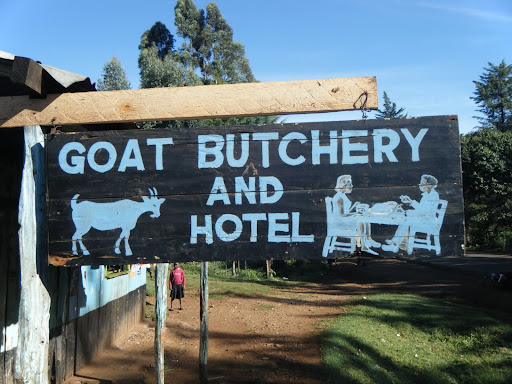
Goat Butchery & Hotel

Africa has the best road signs in the world...

This is a good example.
Photograph taken by Adam Wolley (www.wheresadam.net) during his London to Cape Town bicycle ride in 2010.
http://picasaweb.google.com/adam.wolley
More Links:

Wednesday, August 11, 2010

Adventuress Wanted - Redbuggy.com Film Review

Ever thought of doing an Trans-Africa vehicle expedition?  If you have, be sure to watch this unique new film: Adventuress Wanted

Be warned: Africa is Tough!  This is not in the travel brochure!
It starts with an adventurous dream... a red beach buggy in Africa.
Add a travelling companion - not the simple way but through an advert in the local news paper: Adventuress Wanted - apply here!

What a mix you end up with: A beach buggy designed for one purpose - Sunday beach drives ; A New Yorker with an attitude of anything-is-possible ; And one Japanese dive instructor.  This unique trio makes a challenging adventure turn into a daily thriller.

Buggy problems, appendix issues, visa nightmares - just a few of the moments that during the film keep you guessing.  This is a unique roadtrip across Africa.  Forget the backup crew, the two support vehicles - this film is all about independent overland travel down the East coast of Africa.

Adventuress Wanted will motivate the traveller within, inspiring you to dream large and to see your dreams fulfilled.

Enjoy the preview and be sure to buy the DVD!


Additional Links:


Wednesday, August 4, 2010

Traditional & Digital Media - essential to an overland trip

Two items that should not be forgotten when packing:  Books & an Ipod (MP3 Player).
There are times during an overland trip were you just need to chill.  Picking up a good book, listening to an iPod or simply typing up the next blog is just one of the ways to relax.
There are only so many oil checks you can do on a vehicle before the need to stretch out in your favourite chair :-)

Traditional Media (books & CDs), along with digital media (iPods & laptops) form part of the relaxation process.  Downtime during an overland expedition is important - if in your planning phase consider the following items:

Traditional Media
Picking up a good novel, reading it and then trading it for the next is a simple pleasure.
During my overland trip, I read everything from the Zulu & Boer wars, through to the latest Wilbur Smith novels.
One author I am currently enjoying is Tony Park.  Tony Park writes about Southern Africa and his novels have a good mix between adventure, a bit of love and the African bush. For more information on this author, visit his website or read his blog.


Digital Media
One of the best devices this past decade has to be the mainstream introduction of MP3 and the Apple iPod.  Linking a device like this to you car radio makes for a perfect listening experience.  Enough said on this topic as majority of overland trips already have an iPod or similar device.

One key element of digital media is the ability to expand on your listening pleasure.  Adding to your music collect with a few downloaded audio podcasts, or a few audio books.  Listening to an interview or listening to the 48hours of Harry Potter is a good way to keep the driving from getting boring!

In summary, make sure you have a space for those books and that your iPod can connect to the car stereo.  Buy a good selection of audio books and printed ones.  Scrounge the internet for podcasts you enjoy and download all the back issues.

A few podcasts I enjoy:

Friday, July 30, 2010

Overland Live - Photo & Video Updates

Overland Live Logo
The Overland Live website aggregates all the latest independent travel websites updates into various categories. This function is enabled via RSS feeds from the travellers website and is enabled by default if using an online blog, photo sharing or Youtube service. I blogged about free website tools which are beneficial to enabling you to keep your travels online.

As a result of these RSS enabled websites, Google provides a service called Google Reader.  This service enables you to link all your favourite websites into Google Reader and to receive the updates automatically as the end publisher uploads new material.  Effectively this means that you have a single site to browse (Google Reader) rather than visiting multiple websites to see if any new content has been added.  This forms the foundation for Overland Live - a single site displaying the latest blogs, photos, videos, tweets and forum updates.

I have now made a few additional changes to how the photos and videos are displayed. Instead of displaying text only for the photo, the website displays the photo - a far better browsing experience.

Here are the links to the updated pages:

Overland Live Photos
Overland Live Videos

Please email me if you have any suggestions on how to improve the Overland Live service.

Tuesday, July 27, 2010

Stimson Explorer Kit - expedition field kitchen

BigSky Adventures Cooking setup
The cooking setup of overland vehicles vary considerably.  Some vehicles have fantastic looking expedition kitchen units integrated into the vehicle - others have rusty old gas cookers or charcoal burners.  All do the job - some are just more efficient than others.

In my search for the optimum cooking setup, I stumbled across the Stimson Explorer kit. In summary this is a field kitchen build into a neat storage unit and would make the ideal expedition field kitchen for an vehicle based journey.

Unit Overview:
The unit comprises of a sturdy box with a lid that opens and is supported with an extending leg. The sides have supporting handles which are clipped in place during transit.

The interior comprises of the following equipment:


Gas cooker & cartridges
Cooler Box
Cutlery & cutting board
Wash basin
Stimson Explorer Kit - field kitchen in a box
Water Bottle & Pump 

Ease of Setup:
The benefit of this unit is the ability to open the lid and get cooking quickly or remove the unit from the vehicle and setup in a convenient location.
The lid is held on via two elastic bands whilst the water pump is hinged to a holder on the left.

The water tank is independent which means that you can use any water source rather than carrying an integrated water tank around with you.


Vehicle integration:
The unit is standalone so could be mounted on sliding rails or secured to the floor using straps.

Slight Improvements:
The unit, in my opinion, ticks many boxes for an overland trip - easy of use, integration into vehicle, best use of storage space.
However, there is one improvement that is needed.  The gas cooker is stored under the water basin which means that that after use, you will need to allow the unit to cool before packing away.  A neater system would be small drawer system so that the gas cooker can be packed away hot.

Summary: 
If you are planning your overland trip and are undecided on the cooking arrangements, I would recommend looking at this unit. It can integrate neatly into your vehicle and offers the benefit of a compact design which includes majority of your cooking equipment.

Additional photos:


Friday, July 23, 2010

Special Update: World Premiere for "Adventuress Wanted"

Perseverance pays.
After six years in the making, director Thomas McAlevey's first feature length film "Adventuress Wanted" is premiering on the big screen in the heart of New York City.
This 85-minute movie will have its World Premiere at The New York International Independent Film & Video Festival on Thursday, July 29th at 8:10pm, Screen 3 at Village East Cinemas at 181 2nd Avenue (near East 12th) in Manhattan. Tickets are $15.00 and include entry to the after party at Union Square Lounge (see www.nyfilmvideo.com for tickets and details).
"Adventuress Wanted" is a film about love and life, about heroic efforts in the face of adversity, and about noble intentions gone awry. Set against the majestic and dramatic landscape of Africa, the film counterpoints uncommon natural beauty with the universal challenges of a developing human relationship.
"Adventuress Wanted" chronicles the amazing journey of newly met couple Yoshiko and Tom as they pilot their tiny Beach Buggy across all of Africa; armed only with their wits, the daring duo brave everything from close encounters with lions and rhinos to a death-defying illegal entry into Sudan.  There is no additional camera crew, no follow vehicles, and no support team of any kind! From soldiers with AK-47's to irate elephants - our intrepid travelers go it alone. Through the tears and the mind-boggling physical challenges, Yoshiko and Tom keep their camera rolling.
The film will have its West Coast premier in September at the Downtown Film Festival in Los Angeles; details forthcoming (www.dffla.com).
In addition,"Adventuress Wanted" is now being distributed worldwide by Taurus Entertainment (with offices on the Paramount lot in Hollywood). A DVD is slated for public release soon.
Personal note to Redbuggy subscribers; www.redbuggy.com has not yet been updated to reflect these recent developments. We appreciate your patience and your loyalty and promise to update the site as soon as possible.
If you are on Facebook, please visit our NEW PAGE "Adventuress Wanted" and 'Like' it.
We appreciate your support very much.
More news to come soon…
Regards,
Redbuggy.com

Wednesday, June 23, 2010

Demountable Camper Review: S-karosser Camper (EC7 ; ECO200)

In a blog posting a few months ago, I hinted at the possibility that a demountable camper (truck camper in the USA market) might be an alternative option to the traditional overland vehicles.  You can read the previous posting here.

I was impressed with the concept - a perfect daily vehicle, and an ideal camper for short or extended trips.  As a result, I searched the UK sale websites and found a Leisure Camper mounted to a Ford Ranger 2.5l diesel double-cab (four door, five-seater).

The demountable camper I purchased was designed in Sweden by S-karosser and exported to various European countries under different brands.  In the UK, they are registered as Leisure Campers and in Germany NordStar.  My model is listed as an EC7,2-0 in the UK and as an ECO 200 in Germany.

The EC7-2,0 (ECO200) is a three berth camper, fitted with a twin gas stove, sink, 80L fridge, 60L fresh water tank, and an ALDE 3010 hot water & central heating system.

The stability legs (standing posts) are mounted in strategic places on the camper.  The front legs are mounted horizontally whilst the rear legs are lifted vertically (as seen in the photo).

This model is designed to fit on most Japanese single or double cab vehicles.  A modification is required to fit it on a Land Rover Defender 130.

 In the first posting on this topic, I raised a number of questions.  Here are my thoughts after a few months of ownership:

Q: Flexing - would rough roads flex the camper and cause damage?
A: This model is connected via four retaining bolts which hold the front and rear in place.  The camper does not move on normal tarred roads (like you would expect). I have not tested the unit on rough gravel roads.

Q: Wind resistance - in strong winds (like Patagonia & Mauritania), what effects does this have on the vehicle
A: Strong winds will affect the driving experience and fuel consumption.  Suspension is key to this setup.  The EC7 (ECO200) weighs about 650kg fully loaded.  The rear shock absorbers do work hard.


Q: Space - how much living space does this give you over and above a camper?
A: The living pod is perfect.  There is sufficient space for two adults however the area lacking is expedition packing space.  There is not much space for vehicle spares, recovery kit, jerry cans, sand ladders and the host of other paraphernalia.
In the photo on the right, you can note the height difference between the camper and a standard Land Rover Defender with rooftent.

Additional Thoughts:
Mounting / Demounting:  This process is relatively straight forward.  The camper rests on the rear load bin on the vehicle and is connected via four retaining connectors.  Demounting the camper requires the retaining bolts to be undone, the standing legs removed from the mounts. Once this has been done (about 15min), the camper needs to be raised so that the vehicle can be moved.  The standing legs involve a very manual process of walking around the camper winding in the legs in turn.

Once the camper is raised, the vehicle can be driven away and the process of lowering the camper begins.  This requires a number of laps of the camper as each support post is lowered.  Total time to remove the camper is about 30min.

Mounting the camper is reverse of the demount process except this is the hardest bit - reversing the vehicle squarely under the camper.  My tip on this process is to use low-range reverse as it gives me less speed whilst reversing. Mounting time is roughly 40min.

Central heating: Perhaps not fully required for the Southern Hemisphere, the combination of the ALDE3010 hot water and central heating system on the camper is a winner for the Northern Hemisphere.

Summary
I would encourage you to look at a demountable camper as an option for an overland trip - the ideal journey would be trans-continental in a colder climate i.e. Asia Overland.  My thoughts are that in the hotter climates like Africa, the ventilation in the camper would not be sufficient to make it a good experience.

There are not many occasions that you would consider demounting the camper (on a typical overland expedition) however a good option would be in the various game parks.  Demount the camper, and you have very quick and easy access to the vehicle for those early morning drives.

If you are based in the Northern Hemisphere, this combination of camper makes the perfect choice for the climate, the occasional trips to Northern Africa and more importantly the ability to camp anywhere in France (caravans & tents are restricted to camp sites but motohomes & campervans are allowed to park and camp anywhere).


Additional Photos of the Leisure Campers EC7-2,0 (Nord Star ECO 200)


Additional Photos & Reading:
Reisemobil Ludwig - S-Karosser Campers branded as Nord Star (German Brand)
Peter & Jill Bardsley - Expedition to Africa (Popup Camper)

Appendix:
Mounting the EC7 (ECO200) Camper on a LR Defender 130. 
My understanding is that the LR Defender 130 rear load bin is to deep to mount the EC7 camper. As a result, the load bid needs a platform fitted for the camper to rest on.  I have two thoughts about this:
- The ride height might make the Defender and Camper unsteady in windy and rough terrain
- The raised platform will allow for additional storage (a good thing).

The photo on the right is from the Reisemobil Ludwig website.  Note the extra length of the load bin compared to the Ford Ranger.